





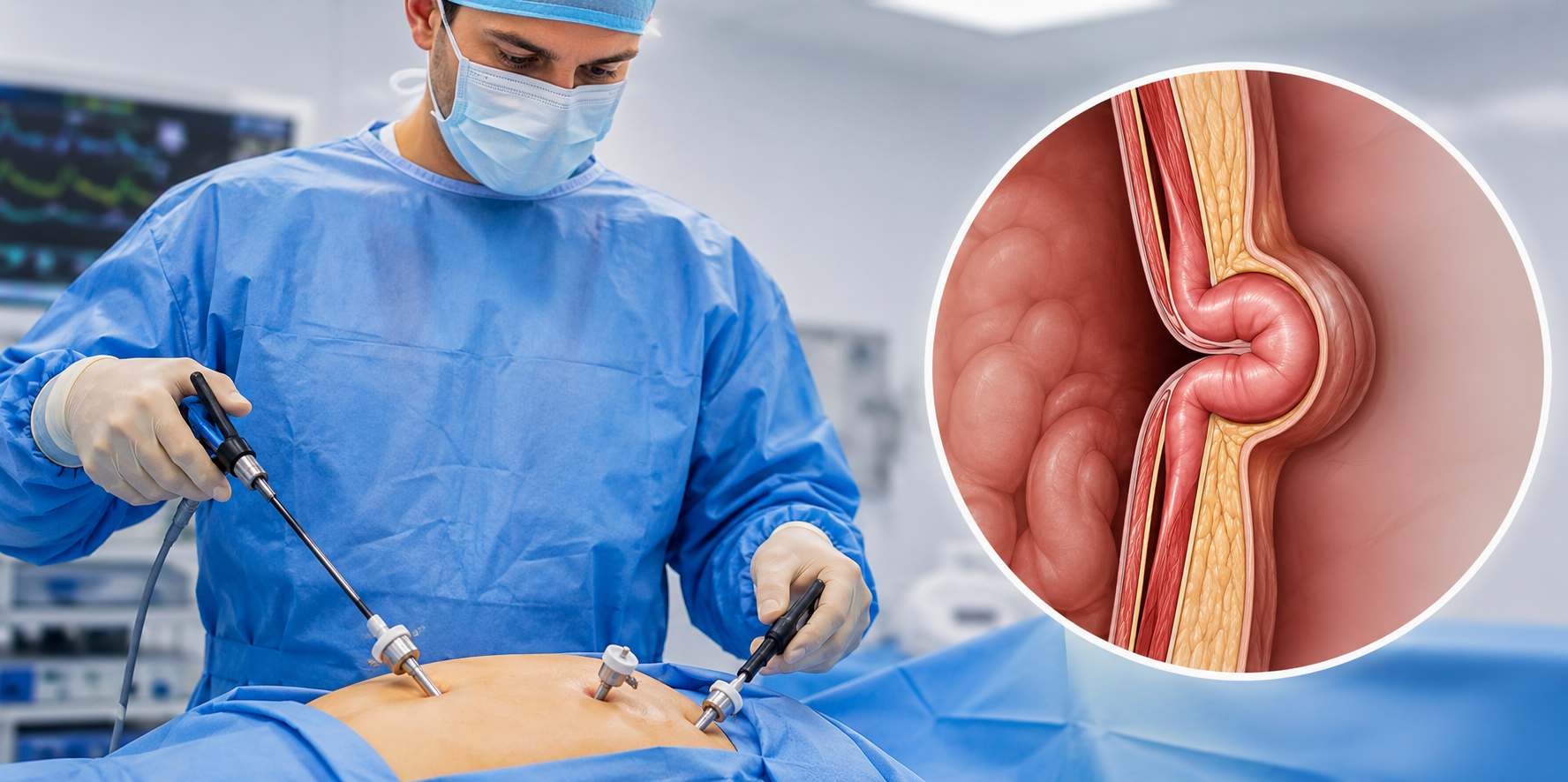
Knowing when a hernia requires surgery can prevent serious complications. Hernia is a growing concern today. The National Library of Medicine (NLM) report states that the number of hernia cases is expected to rise steeply till 2035.
The good news is that the condition can be cured, thanks to advanced, innovative medical technologies transforming the modern healthcare system. Hiatal hernia surgery by Prospero Medical is among the tested procedures known to eradicate the root causes of hernia, with proven outcomes. It is a minimally invasive, laparoscopic technique that aids in faster recovery, less pain, and shorter hospital stays than traditional open surgeries.
Signs That Mean You Can’t Afford to Wait Any Longer
While many small hiatal hernias can be managed with lifestyle modifications and medications, hernia surgery becomes necessary when the stomach herniates excessively (e.g., beyond 7 cm) or when conservative treatments fail.
Warning Signs Requiring Urgent Surgery
Medication Failure: Maximum-dose PPIs (proton pump inhibitors) no longer control your acid reflux or heartburn.
Severe Dysphagia: You experience difficulty and pain while swallowing food. The food you consume slowly passes through the esophagus.
Respiratory Complications: The chronic acid aspiration triggers recurrent pneumonia, severe coughing fits, and asthma.
Anemia or Bleeding: The hernia is causing slow gastrointestinal bleeding.
Early Satiety: The constrained stomach gives the feeling of premature fullness.
Immediate Emergency Indicators
Acute Pain: Sudden, intense chest or abdominal pain.
Respiratory Distress: Shortness of breath or rapid heart palpitations.
Severe Vomiting: Non-productive retching or severe vomiting.
GI Bleeding: Vomiting blood or passing black stools.
Complete Obstruction: You suddenly cannot swallow anything, or you feel food get completely trapped in your chest.
What to Expect From Hernia Surgery
Hiatal hernia surgery comes with minimal side effects and promotes long-term healing.
The Procedure
Anaesthesia: You will be placed under general anaesthesia, where the surgeon makes a few incisions on your upper abdomen.
The Repair: The surgeon will then move your organ back to its original position, stitch the diaphragm to close the hernia opening (crural repair), and often perform a fundoplication (wrapping the stomach’s top around the lower esophagus) to prevent acid reflux.
Hospital Stay & Immediate Recovery
Duration: The surgery takes about 90 minutes to 3 hours, depending on your condition. The patients are typically discharged within one to two days.
Pain Management: It is normal to feel soreness, muscle aches, or tightness around your incisions. Your doctor will prescribe pain relievers for the initial few days.
Long-Term Recovery (Weeks 3–6)
Dietary Changes: You can typically return to a normal diet after 4 to 6 weeks. However, the medical specialists advise you to chew your food properly and avoid gas-inducing foods such as beans and broccoli for a few months.
Physical Limitations: The doctor may also advise you to avoid heavy strength training or lifting heavy weights, as this can put a heavy load on your healing diaphragm.
Benefits of Hernia Surgery
Hiatal hernia surgery is known to eliminate chronic acid reflux, prevent severe life-threatening complications, and eliminate the need for daily medication.
Immediate Benefits
Mechanical Relief: The stomach is pulled back into the abdomen, which helps relieve physical pressure on the esophagus and lungs, leading to reduced chest pain and breathing difficulties.
Cessation of Acid Reflux: By narrowing the opening in the diaphragm (the hiatus) and often reconstructing the esophageal valve (via fundoplication), the surgery stops stomach acid from washing back up into the throat.
Reduction of Medication: Many patients experience immediate relief from chronic heartburn, eliminating or dramatically reducing their dependence on daily proton pump inhibitors (PPIs) and antacids.
Long-Term Benefits
Sustained Symptom Control: Most patients experience durable relief from severe heartburn, regurgitation, and chest pain.
Mediation Reduction: Significantly less dependency on daily proton pump inhibitors (PPIs) and long-term acid suppressants.
Prevention of Life-Threatening Complications: Permanently resolves the risk of stomach strangulation, tissue death, and severe bleeding.
Conclusion
Hernia surgery is mainly required when you notice a disruption in your daily lifestyle, medication fails, and you experience severe pain in the affected region. The key symptoms include difficulty swallowing, uncontrolled reflux, and respiratory issues.
Emergency situations, although rare, can be triggered by sudden pain, breathing distress, severe vomiting, and GI bleeding, necessitating hiatal hernia surgery. Such surgeries are largely useful to eliminate acid reflux, reduce medication dependence, and prevent life-threatening complications.
At Prospero Medical, we feel proud to offer advanced treatments that not only heal conditions like hernias but also nurture holistic wellness. Join this legacy and take a step toward a brighter, healthier future.
FAQs
1. Who is the ideal candidate for hernia surgery?
The ideal candidate for hiatal hernia surgery is someone with a large hernia or persistent, severe acid reflux (GERD) and pain that does not respond to medications and lifestyle changes.
2. How successful is hernia surgery long-term?
Hernia surgery is highly successful, with an overall success rate of 90% to 95%. However, long-term outcomes, including the risk of a hernia returning (recurrence) or chronic pain, largely depend on the hernia’s location, the surgical method used, and the patient’s lifestyle factors.
3. Does hernia surgery leave visible scars?
Yes, hiatal hernia surgery leaves visible scars on the body. However, their visibility depends on the surgical method.
4. How soon can I drive after surgery?
You can generally drive one to two weeks after surgery. The exact timeline depends on healing progress and pain levels.
5. Can a hiatal hernia return after surgery?
Yes, a hiatal hernia can return post-surgery, though the risk is low given the surgery’s effectiveness in delivering long-term results.




 Request A Call