
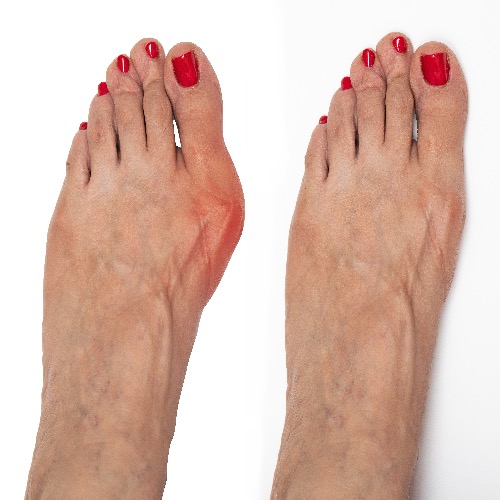
Hallux Rigidus, also referred to as “stiff big toe”, is a type of osteoarthritis affecting the big toe joint. The big toe is made up of two joints, with the primary joint being the metatarsophalangeal (MTP). The MTP connects the metatarsal, the long bone in the foot, with the first phalanx, the first bone of the toe. The MTP joint allows the toe to bend, grip the ground, and contribute to the flexibility needed when walking.
The bones of the MTP are covered with a smooth layer of articulate cartilage, which reduces friction. However, if the cartilage wears down or gets damaged, the bone ends can begin to rub against each other, leading to friction and irritation. Hallux damage develops due to cartilage degeneration, or arthritis in the MTP joint, where repetitive stress, trauma, or structural abnormalities contribute to the breakdown. It often limits movement, particularly during walking or running. Over time, bone spurs (osteophytes) develop as the body’s misguided attempt to repair itself, further restricting motion and exacerbating discomfort.
Patients often experience symptoms such as sharp or aching pain at the joint, noticeable swelling, and restricted upward motion of the big toe. Over time, the joint may develop a visible bump, and pain worsens with physical activities or even rest. Simple activities like wearing shoes, particularly those with heels can become painful.
In cases of mild arthritis without pain, treatment may not be necessary. However, if the condition causes pain, several measures can help manage symptoms. Opting for shoes with a flat, rigid sole and a wide toe box can help minimize joint strain, while adjustable footwear with laces or straps enhances fit and stability. Pain relief medications, such as ibuprofen, can reduce inflammation.
For early-stage arthritis, a steroid injection may be administered to control inflammation and pain. If the pain worsens and X-rays confirm advanced arthritis, surgical intervention may be required to address the damaged joint.
Surgical options depend on the severity of the damage. The options include cheilectomy (removal of bone spurs), arthrodesis (joint fusion), or arthroplasty (joint replacement). A cheilectomy removes bony overgrowths and clears debris within the joint, enhancing mobility. Arthrodesis permanently fuses the joint, eliminating pain at the cost of movement. This is a reliable option for advanced cases. Arthroplasty replaces the MTP joint with a prosthetic to preserve motion, offering pain relief while maintaining some motion. The metal implants used in fusion surgery are typically left in place unless they cause discomfort. Replacement surgeries use durable silicone implants, which have a long lifespan, with over 90% lasting more than a decade.
When considering surgery for hallux rigidus operation, fusion and replacement offer different paths to relief, each tailored to specific needs and lifestyles. Fusion involves stabilizing the joint in a fixed position, which eliminates all movement but provides reliable pain relief and is well-suited for individuals with physically intensive jobs. In contrast, joint replacement preserves the natural range of motion, making it a preferable option for patients with less physically demanding routines. Both procedures excel in alleviating pain and enhancing the ability to wear shoes comfortably.
The aim of hallux rigidus operation is to eliminate pain, to halt further deterioration, and restore the foot’s biomechanical balance. Whether preserving or sacrificing joint movement, the intent is to empower patients to walk, run, and live without debilitating discomfort.





 Request A Call