





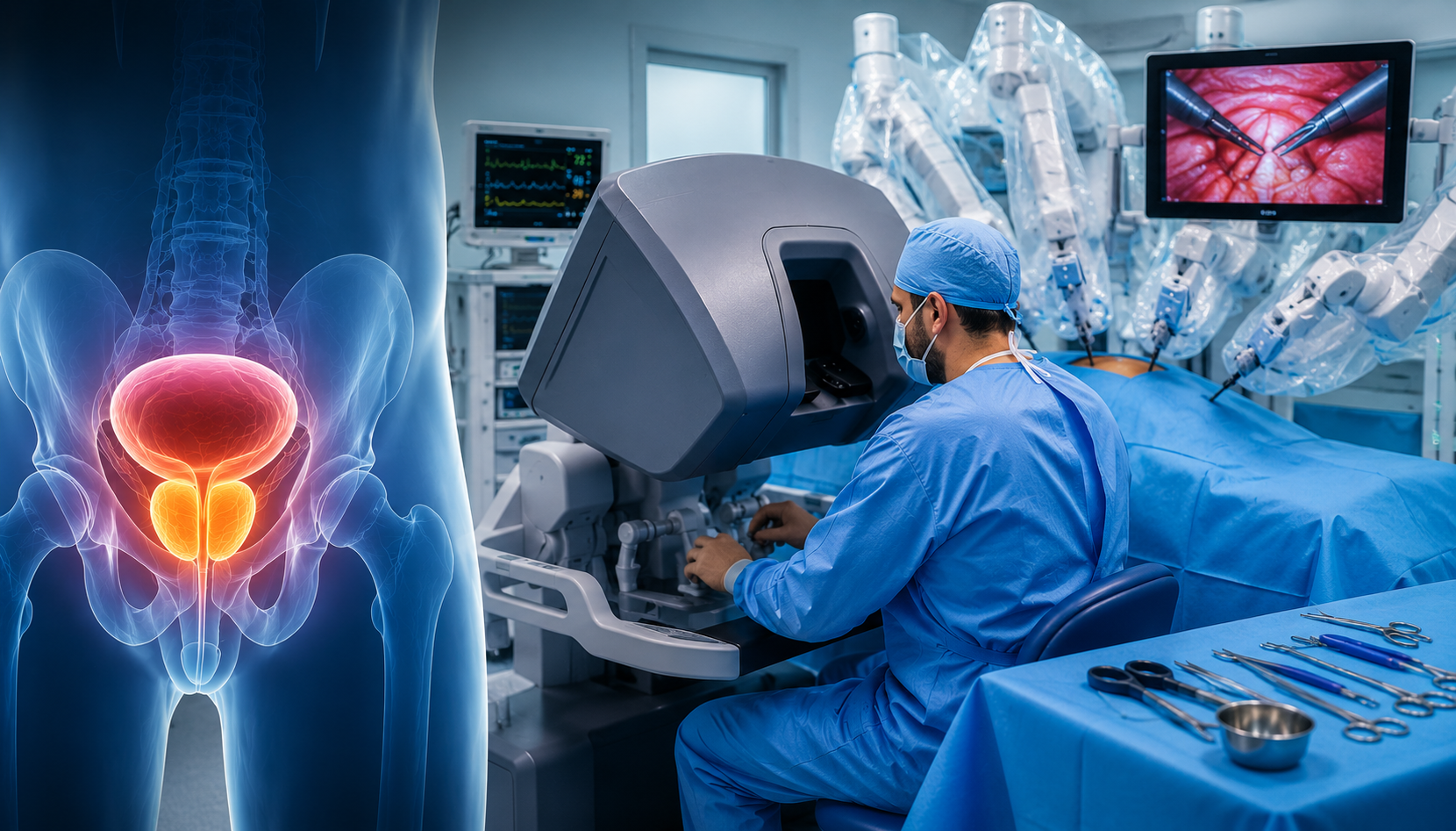
Prostate problems don’t happen overnight. They begin with subtle changes most men tend to overlook. These problems develop gradually over time, causing men to suffer from several issues such as frequent urination, weak urine flow, and difficulty emptying the bladder.
Thus, it is important to not ignore a few symptoms that trigger these issues. These symptoms can lead to conditions stemming from various external and internal factors. In this blog, we’ll explore the early warning signs that may indicate the need for prostatectomy treatment in Turkey.
Understanding the Prostate and Why Early Symptoms Matter
The prostate is a gland located below the urinary bladder, in front of the rectum, and wraps around the urethra (the tube that carries urine out of the body). Its primary function is to produce a milky fluid that helps sperm to survive within the acidic environment of the female reproductive system. This can be achieved by neutralising acidity through alkaline action, leading to the formation of semen.
Detecting early symptoms of prostate problems is critical because early detection can lead to treatable outcomes. Moreover, since the urethra runs directly through the prostate gland, an enlarged or diseased prostate can block or hinder the passage of urine and may cause severe infections if not treated early.
Common Warning Signs You Shouldn’t Ignore
Prostate problems, in many instances, show no early signs. However, there are certain minor signals or red flags you should watch out for.
Key Urinary Warning Signs
a) Frequent Urination: You may experience an urge to urinate frequently, often at times when you feel that you haven’t drunk enough fluid.
b) Weak or Interrupted Flow: Your urine stream may become weak, stop, and start again during urination in many situations.
c) Hesitancy & Dribbling: You may feel dribbling (involuntary leakage of urine) at the end of urination.
d) Incomplete Emptying: Even after urinating, you still feel your urinary bladder is not empty.
Other Critical Red Flags
a) Blood in Urine or Semen: Hematuria (blood in the urine) or hematospermia (blood in the semen) are critical warning signs that require immediate medical attention.
b) Pain or Discomfort: You may feel pain, a burning sensation, or discomfort while urinating.
c) Erectile Dysfunction: In severe cases, you may experience erectile dysfunction.
d) Unexplained Weight Loss: You may also experience significant weight loss despite having adequate calorie intake.
When Symptoms Point to Something More: Exploring Prostatectomy Treatment in Turkey
As these symptoms can get severe, these symptoms may indicate conditions such as
a) Benign Prostatic Hyperplasia (BPH): Non-cancerous enlargement of the prostate gland that occurs with aging.
b) Prostate Cancer: A malignant tumor that develops in the prostate gland.
c) Prostatitis: Inflammation or infection of the prostate gland.
d) Advanced Prostate Cancer with Metastasis: A condition in which prostate cancer spreads outside the prostate gland to other parts of the body.
With such criticalities of these prostate problems, prostatectomy treatment in Turkey becomes the solution—a minimally invasive surgical procedure where the surgeon removes the affected or the complete prostate gland to prevent the above-stated issues from expanding. The surgery provides several key benefits, such as
a) Cancer Eradication: Removing the entire prostate gland can eliminate localized prostate cancer before it spreads.
b) Accurate Staging: Medical professionals test the removed issues, helping in the accurate diagnosis of the problem.
b) Definitive Monitoring: Post-surgery PSA blood levels ideally drop to near-zero values, making cancer tracking highly precise.
c) BPH Symptom Relief: Removing benign prostatic hyperplasia can free the urine flow within the urethra.
d) Eliminates Medications: Successful surgery eliminates the hefty expenses of BPH-prescribed medications.
Why Choose Prospero Medical for Prostatectomy Treatment
Choosing a reliable hospital for prostate cancer treatment is a critical decision that requires thorough analysis of various factors, including surgeon expertise and hospital accreditation.
Prospero Medical is a reliable partner in delivering proficiency in advanced surgical techniques with a transparent and credible track record. Additionally, all our medical experts are highly certified with vast experience in performing a high volume of prostate surgeries. What sets us apart is our comprehensive pre-operative and post-operative support (subject to the condition) as part of our medical tourism package.
If you are looking to join our services, you can book an online or face-to-face consultation by tapping on this LINK.
FAQs
1. Who is an ideal candidate for prostatectomy?
The ideal candidate for prostatectomy treatment in Turkey is someone with significant prostate-related symptoms such as severe urinary problems or prostate cancer.
2. Which prostate conditions require immediate surgery?
Immediate surgery is required during acute, complete urinary blockage, significant bleeding, severe infection, or aggressive localised prostate cancer that risks spreading.
3. How long does prostatectomy recovery usually take?
Prostatectomy recovery may take 4 to 6 weeks for minimally invasive or robotic surgery and 6 to 10 weeks for open surgery.
4. When can normal activities resume after surgery?
You can typically resume your light activities within 1 to 2 weeks, such as normal walking or light exercising. However, lifting heavy objects over 5-10 kg is restricted for up to 6 weeks (or longer) to ensure proper healing.
5. Can sexual function recover after prostatectomy?
The recovery timelines typically span from 6 months to 2 years, depending on multiple factors such as age and pre-surgery sexual health.




 Request A Call